 1st Floor, Willowbridge Centre, Carl Cronje Drive, Tyger Valley



- MetCon Silver Kilobar
A Brief History of the Krugerrand: South Africa’s Famous Bullion Coin

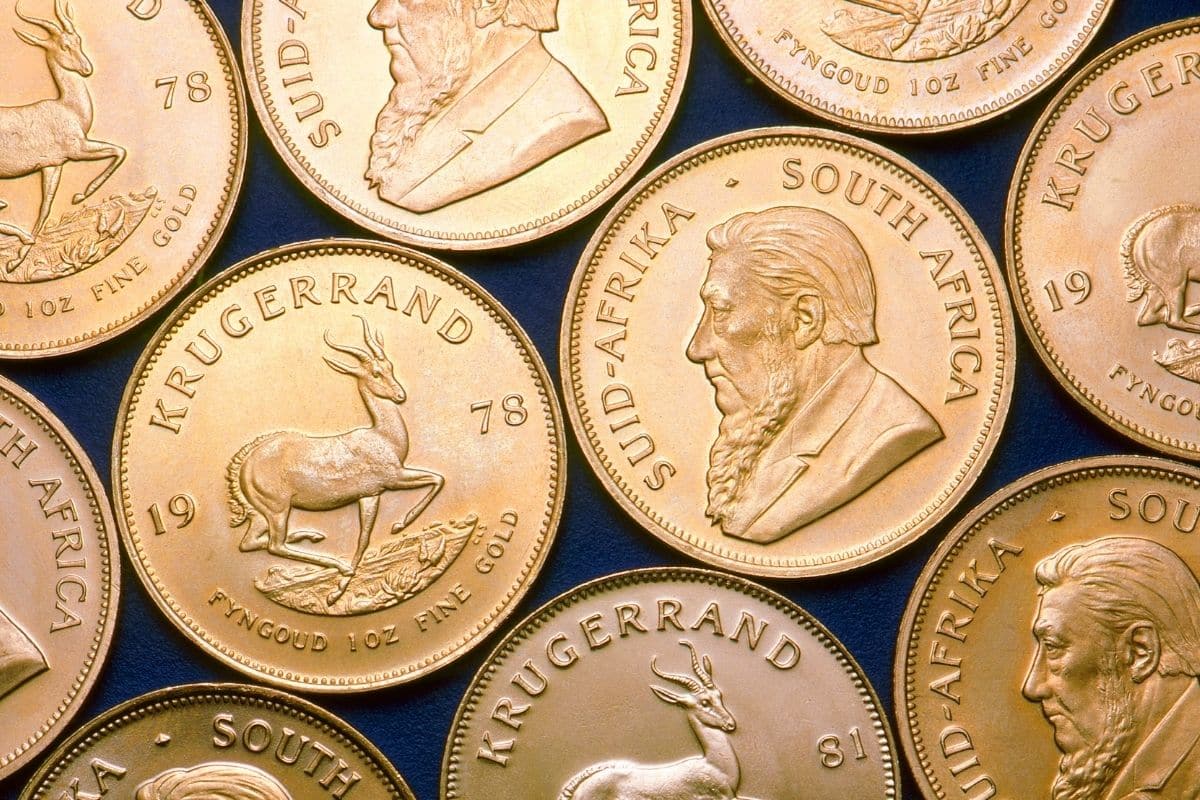
The Krugerrand was never meant to be spent. South Africa launched it in 1967 for one reason: to make it possible for ordinary investors anywhere in the world to own physical gold. It worked splendidly. More than half a century later, it is still one of the most recognised gold coins on earth. Read on for the history of the Krugerrand, its journey through the gold trade, and why it still works so well as an investment today.
Key Takeaways
- The first Krugerrand was minted on 3 July 1967. It was the world’s first gold coin made for investment rather than circulation.
- The name joins “Kruger,” after former ZAR president Paul Kruger, and “rand,” South Africa’s currency.
- The Kruger portrait on the obverse is by Otto Schultz. The Springbok on the reverse is by Coert Steynberg.
- A Krugerrand is 22 karat gold: 91.67% gold and 8.33% copper, which makes it harder wearing than pure gold.
- The 1/2 oz, 1/4 oz and 1/10 oz sizes were added in 1980.
- Sanctions closed major markets from 1985. Trade recovered after they were lifted in the early 1990s.
What Is the Krugerrand?
The Krugerrand is a South African gold bullion coin, produced by the South African Mint since 1967. Each 1 oz coin holds exactly one troy ounce of fine gold. Its value follows the gold price, not rarity or collector demand. More than 52 million ounces of Krugerrands have been sold to date.
It was the first coin built purely so private buyers could own gold at a small premium over the metal price. That model was copied widely. The Canadian Gold Maple Leaf, American Gold Eagle and Chinese Gold Panda all came after it.
Why Was the Krugerrand Created?
In the 1960s, South Africa was the world’s largest gold producer. But there was no simple way to sell that gold to private investors. Gold moved through central banks, bullion markets and industrial buyers. An individual investor overseas had almost no easy, legal way to own it in coin form.
The Chamber of Mines, which represented the gold mining industry, worked with the Rand Refinery and the South African Mint to fix that. Their answer was a coin with no face value stamped on it, priced on its gold content plus a small premium.
Before 1967, most gold coins, from the British Sovereign to the old US $10 Eagle, were made as money first. The Krugerrand turned that around. It was a trusted, tradeable unit of gold for people who simply wanted to own it.
Why Is It Called the Krugerrand?
The Man Behind the Name
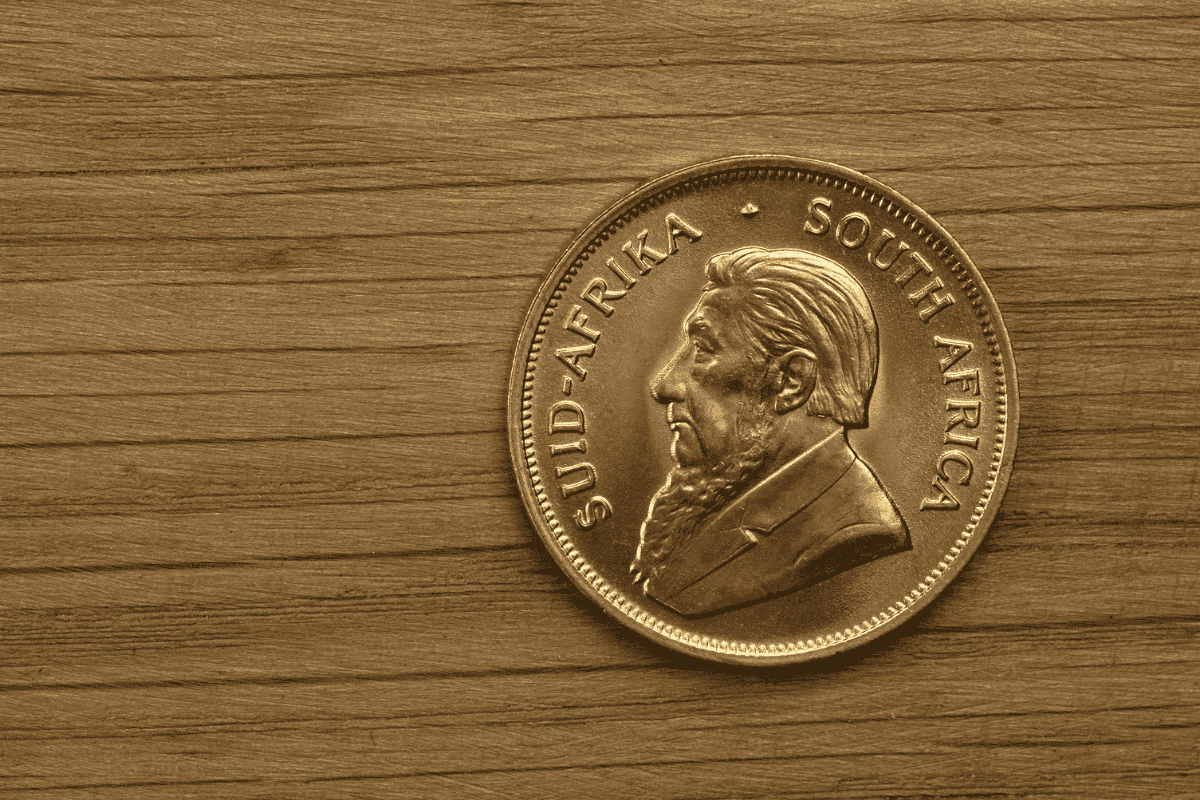
The name joins two words. “Kruger” honours Paul Kruger, president of the South African Republic (the ZAR, or Transvaal) from 1883 to 1900. “Rand” is South Africa’s currency, introduced in 1961 to replace the pound.
Kruger’s portrait was an easy choice. It had already appeared on the ZAR’s gold coins of the 1890s. The Krugerrand uses that same portrait, designed by Otto Schultz in 1892.
The Springbok on the Reverse
The reverse shows a leaping Springbok, South Africa’s national animal, designed by sculptor Coert Steynberg. His Springbok first appeared on South African coins in 1947 and has barely changed since. Buyers in any country can recognise it at a glance, which helped the coin earn trust far from home.
What Is a Krugerrand Made Of?
A Krugerrand is 22 karat gold. That means 91.67% gold and 8.33% copper. The copper gives the coin its warm, slightly orange tone, which sets it apart from 24 karat coins like the Maple Leaf.
The gold content never changes. A 1 oz Krugerrand holds one full troy ounce (31.1 g) of gold. The copper adds weight on top, so the coin itself weighs about 33.93 g. Knowing these numbers also helps you spot fakes, and our guide to authenticating a Gold Krugerrand shows you how.
Why 22 Karat Instead of Pure Gold?
Pure gold is soft. It scratches and dents easily. A bullion coin gets stacked, shipped and traded for decades, so it needs to be tough. The copper makes the Krugerrand harder and better at holding its detail through years of handling.
How Did the Krugerrand Grow in the 1970s and 1980s?
Through the 1970s, the Krugerrand spread well beyond South Africa. By 1980, it made up around 90% of the global gold coin market. For anyone who wanted physical gold rather than paper gold, it was the default choice.
Fractional Sizes Arrive in 1980
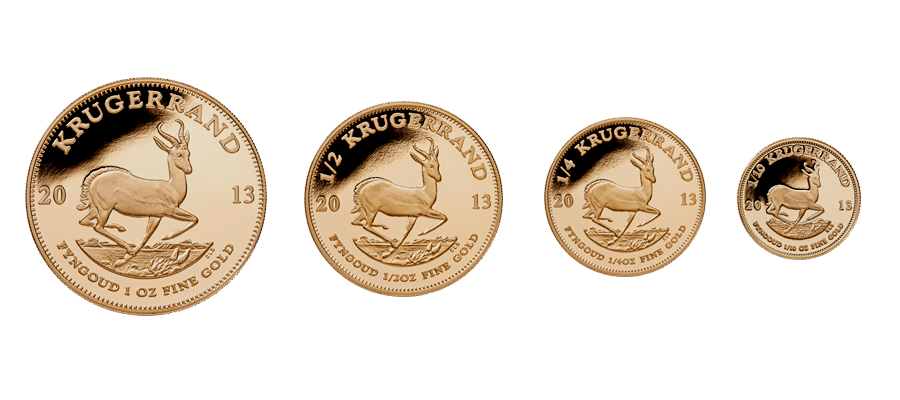
All of that growth came from the 1 oz coin, and its price was out of reach for many smaller buyers. In 1980, the South African Mint added three smaller sizes: 1/2 oz, 1/4 oz and 1/10 oz. Each uses the same 22 karat gold and the same design, just scaled down.
That change opened gold up to far more budgets. Buyers could start small and build a holding over time. Our Gold Krugerrand sizes guide compares all four sizes side by side.
Why Was the Krugerrand Banned?
From the mid-1980s, the Krugerrand’s fortunes became tied to politics. As pressure against apartheid grew, several countries banned Krugerrand imports as part of wider sanctions against South Africa. The United States banned imports in 1985, and Canada and the European Community soon followed.
Sales fell sharply as some of the coin’s biggest markets closed almost overnight. Competitors moved in fast. The Canadian Maple Leaf, on sale since 1979, gained ground, while the American Gold Eagle (1986) and Australian Gold Nugget (1987) launched into the gap.
The Return to Global Markets
Most sanctions were lifted in the early 1990s as South Africa moved towards democracy. The Krugerrand returned to the markets that had banned it and rebuilt much of its standing. It never fully regained its 1980 market share, but it is still one of the most traded gold coins in the world.
Is the Krugerrand Still Made Today?
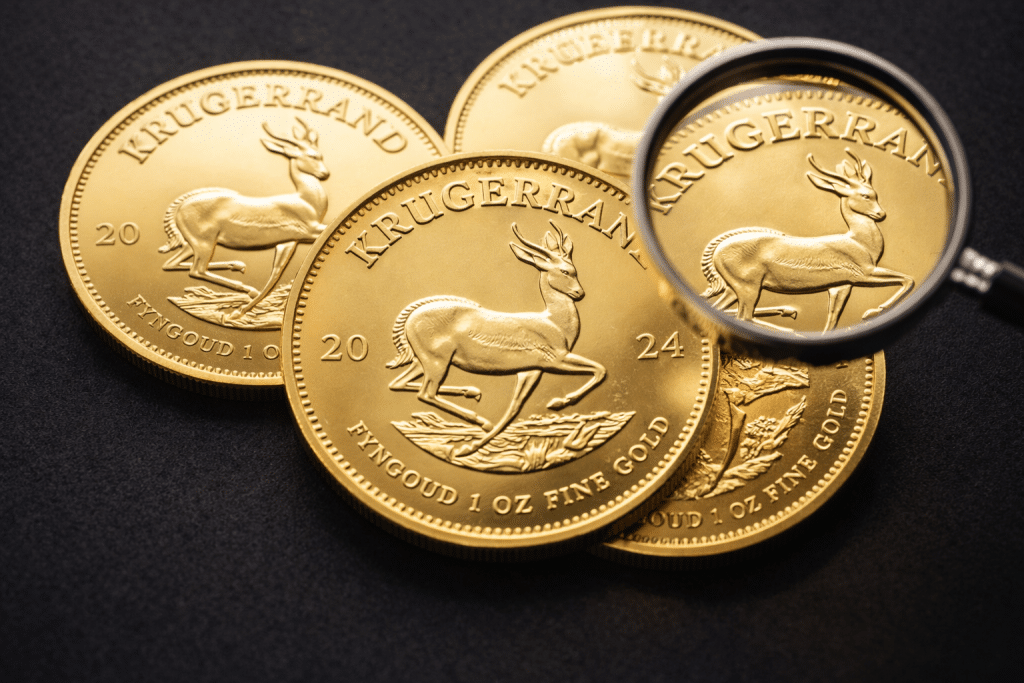
The South African Mint still strikes the Krugerrand using gold from the Rand Refinery, just as it did in 1967. You can see the Mint’s current range on its bullion coins page.
The family has grown, too. Silver and platinum Krugerrands were first struck in 2017 for the coin’s 50th anniversary, and silver Krugerrands are now minted every year. Gold Krugerrands are also made in a proof finish for collectors, and our proof vs bullion Krugerrands guide explains the difference.
Buying Krugerrands in South Africa
Krugerrands are still one of the simplest ways to own physical gold. Browse our Gold Krugerrands for sale or check today’s price list before you buy. Already own some? We also buy Gold Krugerrands.
Frequently Asked Questions
Does the year on a Krugerrand affect its value?
Not for bullion coins. A 1985 Krugerrand and a 2025 Krugerrand hold the same amount of gold, so both are priced on the gold price. The exceptions are proof coins and limited editions, which can sell for more to collectors.
Why does a Krugerrand cost more than the gold price?
The price includes a premium above the gold itself. It covers the cost of minting, distribution and the dealer. Smaller sizes carry a higher premium per gram, because minting a small coin costs almost as much as minting a large one.
Why do some Krugerrands look darker or have spots?
That comes from the copper in the alloy. Over time, it can react with the air and leave darker toning or small reddish spots on the coin. It doesn’t change the gold content or the bullion value.
