 1st Floor, Willowbridge Centre, Carl Cronje Drive, Tyger Valley



- MetCon Silver Kilobar
Proof Krugerrands vs Bullion Krugerrands: What Is the Difference?

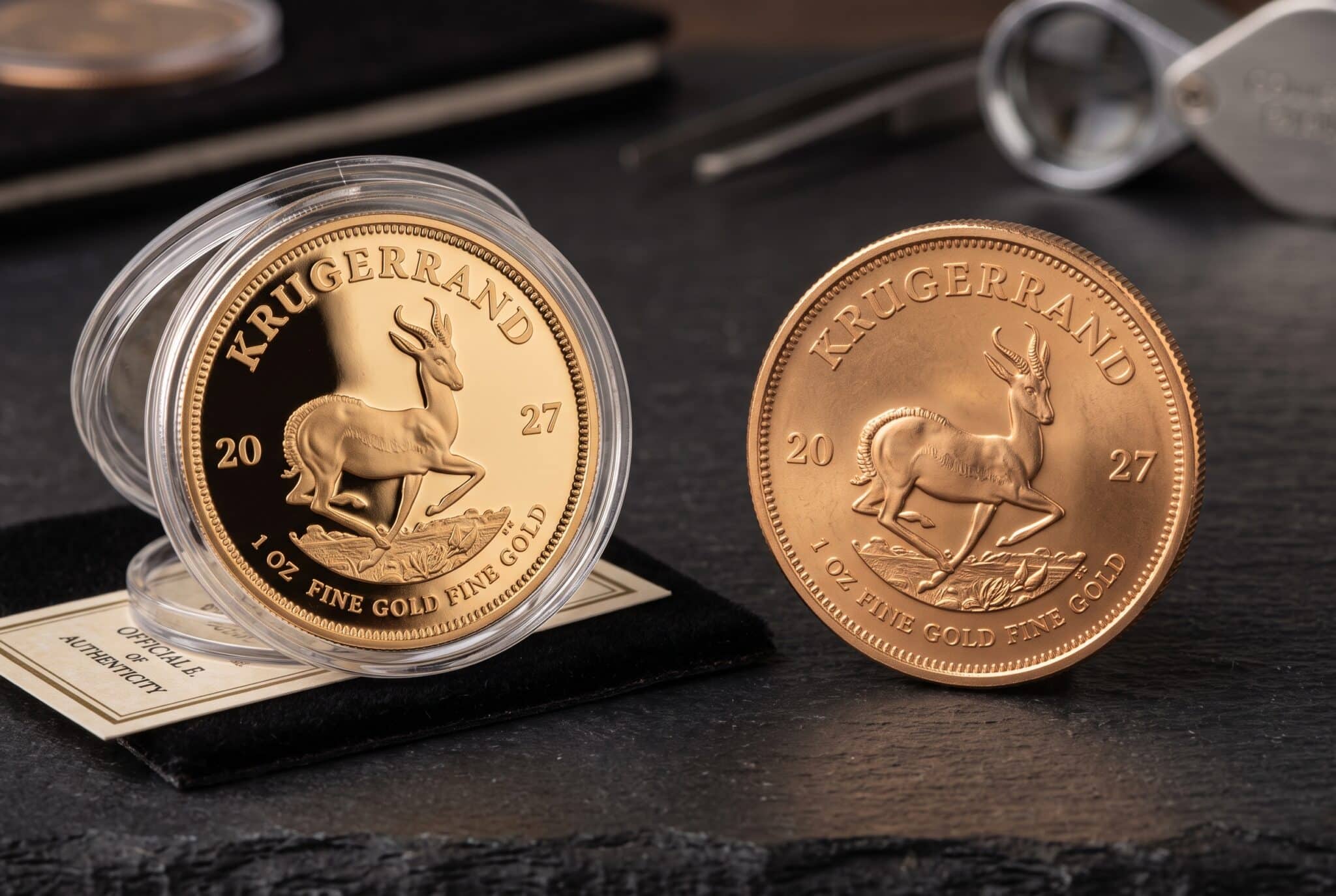
Two Krugerrands can sit side by side, both stamped 1 oz fine gold, yet one can cost two or three times more than the other. The gap comes down to one thing: whether the coin is a proof Krugerrand or a bullion Krugerrand. The gold content is identical; the finish, packaging, scarcity, and price are not.
Key Takeaways
- A proof Krugerrand and a bullion Krugerrand both contain 1 oz of fine gold content in a 22 karat alloy; the gold itself is identical.
- Proof coins are struck with polished dies for a mirror finish and frosted design, then sold in a capsule with a certificate of authenticity.
- Bullion coins are mass produced with a single strike and a satin finish, built for trading at a low premium over spot.
- Bullion suits investors who want gold exposure and liquidity; proof suits a collector coin buyer or someone gifting a limited edition piece.
- Condition drives resale value for proof coins far more than it does for bullion.
What Is a Proof Krugerrand?
A proof Krugerrand is a specially struck version of the gold Krugerrand, made for collectors rather than everyday trading. The South African Mint issued the first proof Krugerrand in 1967, the same year as the first bullion release, and has produced a proof version most years since. Mintage for proof years is typically a small fraction of the bullion mintage for that year.
How proof coins are struck
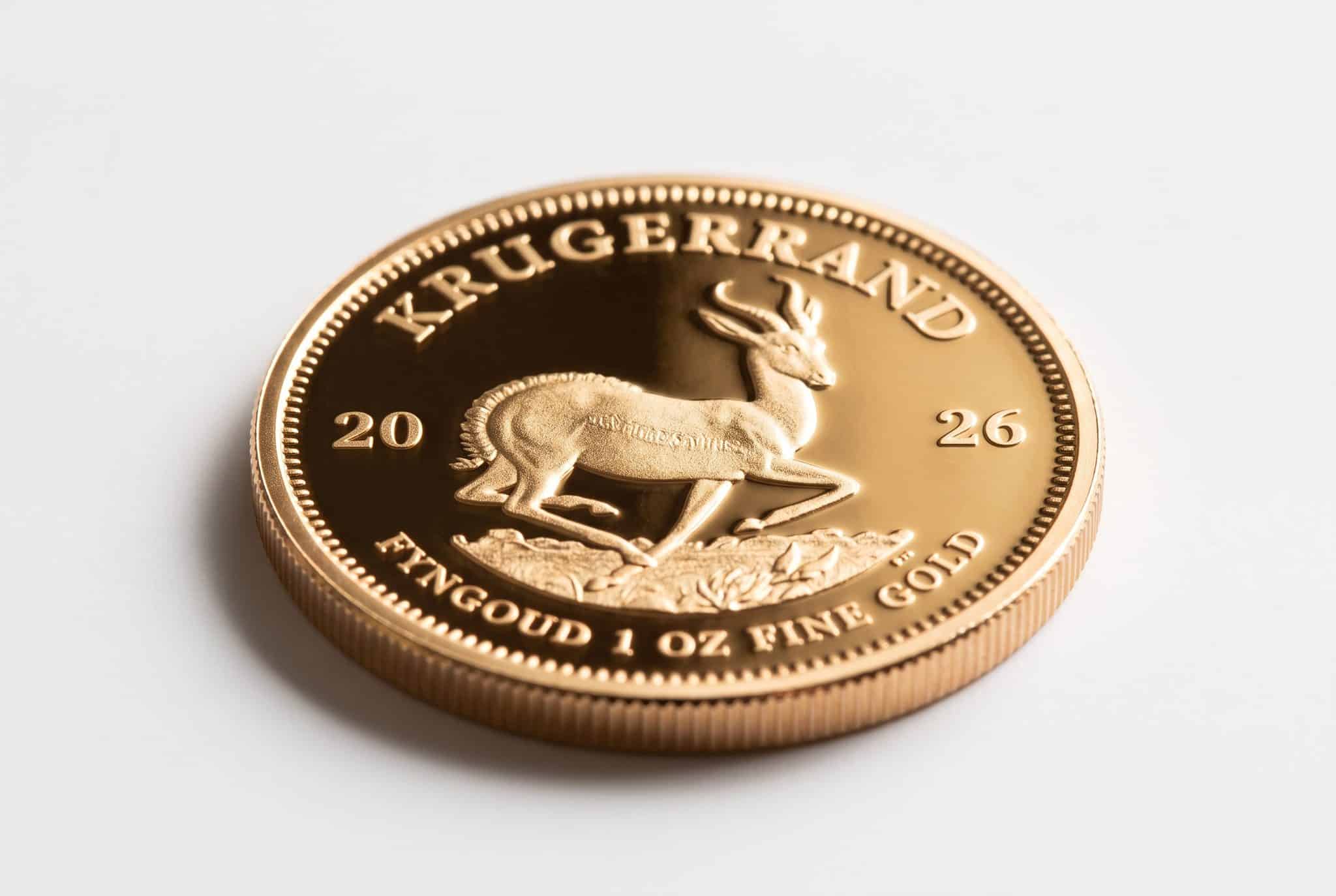
Proof Krugerrands are struck with specially polished dies, each coin struck more than once under higher pressure. This brings out the springbok design far more sharply than a standard strike, leaving the raised design with a frosted finish against a mirror finish background. The dies wear quickly at this pressure, so output stays low and each coin is inspected before release.
Packaging and certification
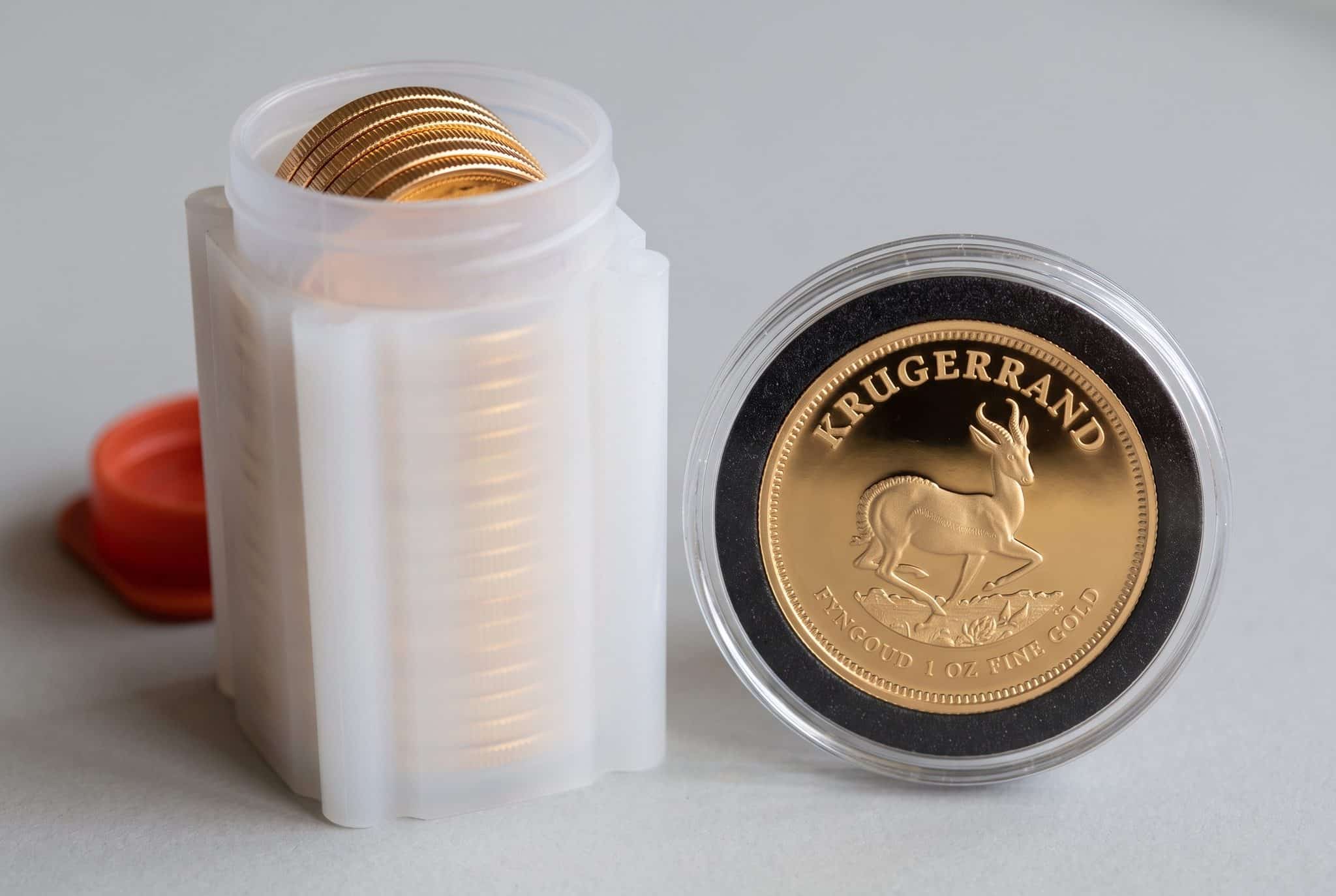
A proof Krugerrand is never sold loose. It ships in a protective capsule with a certificate of authenticity confirming weight, fineness, and year. That documentation protects condition and gives a future buyer confidence, which matters for an investment grade purchase when it comes time to sell.
What Is a Bullion Krugerrand?
A bullion Krugerrand is the coin most South Africans picture: the standard investment coin, bought for its gold content rather than its finish. It is produced in far larger numbers, with mintage in the hundreds of thousands in a given year. Its fine gold content is identical to the proof Krugerrand, so an investor gets exactly the same gold, without the collector premium.
How bullion coins are produced
Bullion Krugerrands are struck once, with standard dies, on production lines built for volume rather than finish. There is no individual inspection and no certificate; the coin’s value rests on weight and fineness. That keeps production cost down and the price close to the spot price of gold, which is the point of a bullion coin.
Why the finish looks different
Where a proof Krugerrand carries a mirror finish and frosted finish, a bullion Krugerrand has a brushed, satin surface throughout, with no contrast between background and design. That is a direct result of the single strike: there is no polishing step. It is a plainer coin, but a practical one, built to be handled and stacked without anyone worrying about marking it.
Key Differences Between Proof and Bullion Krugerrands
The table below sets the two coin types side by side across the factors that actually affect a buying decision.
| Factor | Proof | Bullion |
|---|---|---|
| Finish | Mirrored, frosted cameo finish | Satin or brushed finish throughout |
| Mintage | Low, limited by scarce striking runs | High, produced for ongoing demand |
| Packaging | Protective case with documentation | Plain tube or flip, no documentation |
| Premium over spot | Higher, tied to scarcity | Lower, tracks spot price closely |
| Wear sensitivity | High; marks reduce value | Low; tolerant of ordinary handling |
| Primary buyer | Collector or gift buyer | Investor seeking gold exposure |
For a South African buyer, the rule of thumb is simple: if resale value against day to day spot price movements matters most, bullion is the more predictable choice. A proof coin can still be a good long term holding, but its value depends more on scarcity and collector demand than on gold’s price this week.
Why the Price Premium Differs
Both coin types carry a premium over spot, but what drives the size of that premium differs sharply between them.
What drives bullion pricing
A bullion coin’s price tracks the spot price of gold closely, with dealers adding a modest, stable margin for minting and distribution. Watch any dealer’s live pricing and the price moves in step with the international gold price converted to Rand, which is what makes it transparent and easy to track.
What drives proof pricing
A proof coin’s price is tied less to today’s gold price and more to scarcity, striking costs, and collector demand for a particular year. The first proof release, from the series’ debut year, commands a price driven mostly by its numismatic value, not the current gold price. Scarce years and coins in excellent shape carry the biggest premiums.
Which One Should You Buy? Investment vs Collecting
The right choice depends on what you want from the coin: exposure to the gold price, or a collector coin to keep or gift.
Choose bullion if your goal is gold exposure
If your main objective is holding physical gold, a bullion gold Krugerrand is almost always the better fit. You get the same fine gold weight as the proof version, a lower premium, and a price every dealer sets against the day’s gold price without close inspection of its surface. It is also the most liquid option: bullion trades in high volumes, so liquidity is rarely a concern when converting it back to cash.
Choose proof if your goal is collecting or gifting
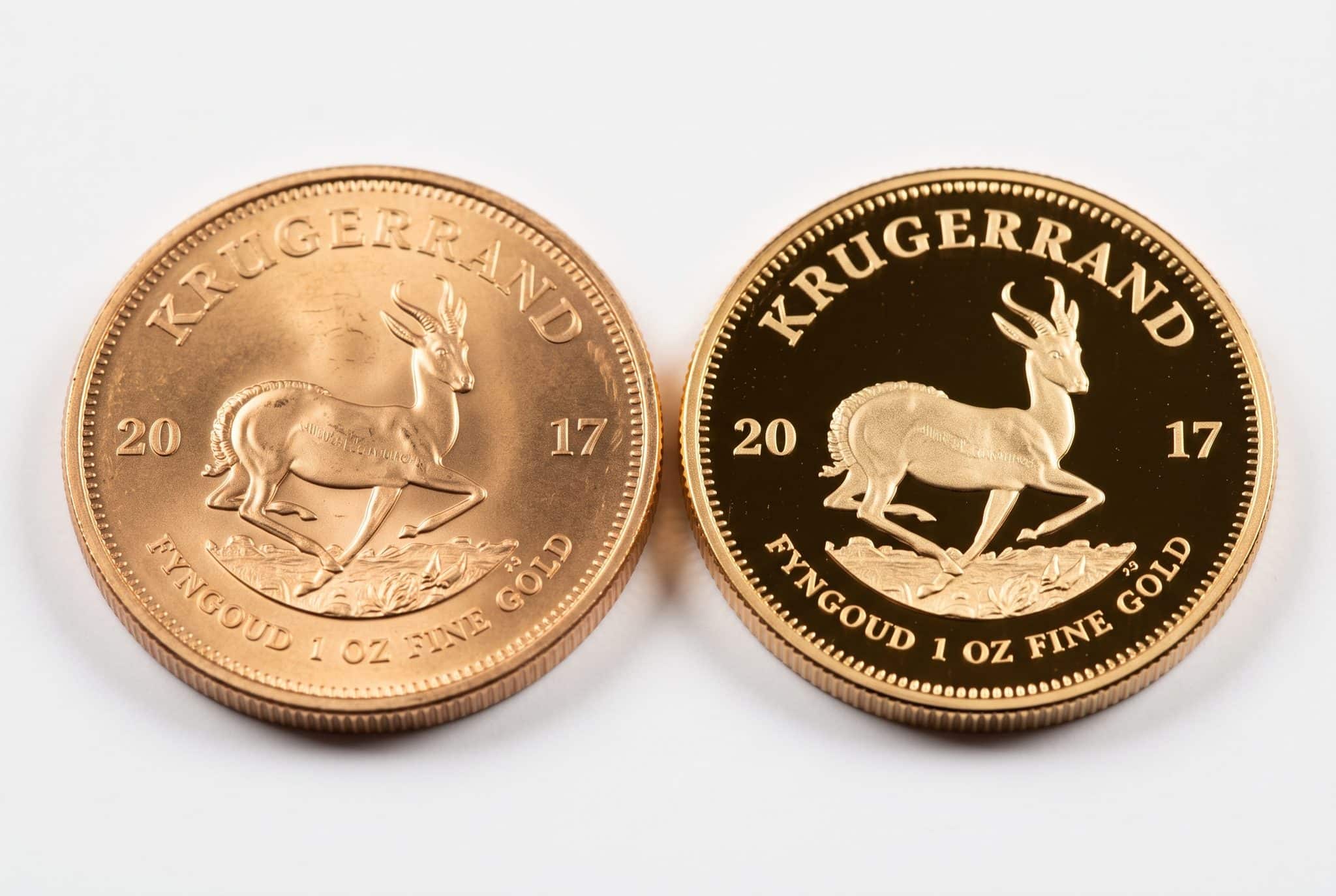
If you are building a collection, marking an occasion, or buying a gift, a proof coin is worth the higher premium: you are paying for the finish, the scarcity, and the documentation behind a particular year. Treat it as an investment grade purchase for a collector coin buyer. Its numismatic value can grow over time, but it will not track the gold price as tightly as bullion.
How to Store and Care for Each Type
A proof coin should stay in its case at all times. Its mirrored surface marks permanently from a single fingerprint or a scratch against another coin, and damage cuts its value sharply, so handle it by the edges only and never attempt to clean it.
A bullion coin is far more forgiving. It is built to be handled and traded, so ordinary contact will not affect its value much, though keeping coins in a tube or sleeve for storage still protects the surface and a better resale price.
Buying and Selling Krugerrands in South Africa
Buy from a dealer who shows clear, current pricing against the day’s gold price and stands behind every gold Krugerrand’s authenticity, struck by the South African Mint. Our gold Krugerrand range covers bullion coins for gold exposure and proof coins for collectors, and our live price list shows current pricing so you can compare before you buy.
What a coin is worth later comes down to the same factors: whether it is proof or bullion, its surface wear, and whether the case, documentation, and storage are intact. If you already hold a gold Krugerrand and want to sell, Bullion Traders buys it back directly, so you are never left with nowhere to sell it.
Frequently Asked Questions
Are proof coins worth more than a bullion Krugerrand?
Usually, because of the scarcer production run, finish, and documentation, though a higher premium still needs real collector demand to justify the price over time.Usually, because of the scarcer production run, finish, and documentation, though a higher premium still needs real collector demand to justify the price over time.
Can I use a proof coin as a pure gold investment?
You can, since the fine gold weight matches a bullion coin exactly, but you pay a higher premium for it. Most investors focused on gold exposure choose a straightforward, investment grade bullion coin instead and leave proof coins to collectors.
How can I tell if a coin is proof or bullion?
Check the finish: a mirrored, frosted surface signals proof; a uniform satin surface signals bullion. Packaging confirms it: proof ships in a case with documentation; bullion is sold loose or in a plain tube.
Is a proof coin legal tender?
Yes. Like the bullion version, it is legal tender in South Africa, though in practice both are bought, sold, and valued for their gold content and collector appeal rather than spent at face value.
Do proof coins hold their value better than bullion coins?
It depends on wear and demand. A well kept proof coin in its original case can grow in collector appeal over time, but a damaged one loses much of its premium. Bullion holds value more predictably because it is anchored to the gold price rather than physical wear.
Both coin types put physical gold in your hands; the right one depends on whether you are buying for gold exposure or for a collection. Browse the gold Krugerrand range or check today’s gold price before deciding, and remember that selling back remains an option if your plans change later.
